
The lies that help us sleep at night: the (dirty) recycling myths

From highly problematic coloured plastics to contaminated recycling, the industry is full of hidden secrets and misconceptions that need addressing urgently for recycling to be sustainable. Yet, with widespread confusion around good recycling practices, this raises the question of whether it is even possible to make recycling worth the ‘green’ reputation it has earned despite these dirty secrets.
Let’s take plastic recycling to start with. Although most types of plastic are recyclable, many of those are problematic. Ultimately, for various reasons, only about 10% of plastic is recycled. As Forbes reports, the belief that what we put in the recycling bin actually gets recycled has by now become a commonly accepted myth. But the reality is much more complicated than that. The World Economic Forum estimates that somewhere around 30% of the plastics we recycle end up somewhere else than we intended them to. In addition, as Forbes further reports, most plastics can only be recycled once.

Widespread confusion around what can and cannot be recycled where adds to the problem. What is recycled varies widely across the UK. While most regions do collect plastic, exactly what can be recycled is by no means clear due to this variability. Although some 90% recycle regularly, around 4 in 5 households end up putting things that are not locally collected in their recycling bins. According to a BBC report, a number of local authorities use more than one provider to collect recycling, adding to the confusion even further - with nearly 50% of people reporting having disagreements about what can and cannot be recycled, and more than 1 in 4 arguing about it regularly.
And the situation gets even more complicated if we consider coloured plastics, which are more difficult to recycle for complex reasons to do with need for extra sorting in processing, as well as lack of demand. While Japan unanimously agreed to ban coloured plastic bottles, proving that swift and decisive action was possible, other countries don’t seem to be in a hurry to follow their lead; raising the question why. According to a Plastics Recyclers Europe report, increased production of coloured plastic has the power to put the whole PET recycling industry in jeopardy.
Glass recycling might seem fairly straightforward in comparison, but the reality turns out to be more complicated than expected, yet again. Despite its reputation as the greener alternative to plastic, it is far from unproblematic. Transport is a major issue, as glass is heavier than plastic and breaks up easily in transit, while also producing more emissions. Further, not all types of glass can be recycled, or at least not easily, with pyrex and coloured glass being especially problematic. And if we look at the whole lifecycle of glass, more dirty secrets emerge - ecosystems depletion as the result of its production being one of them.
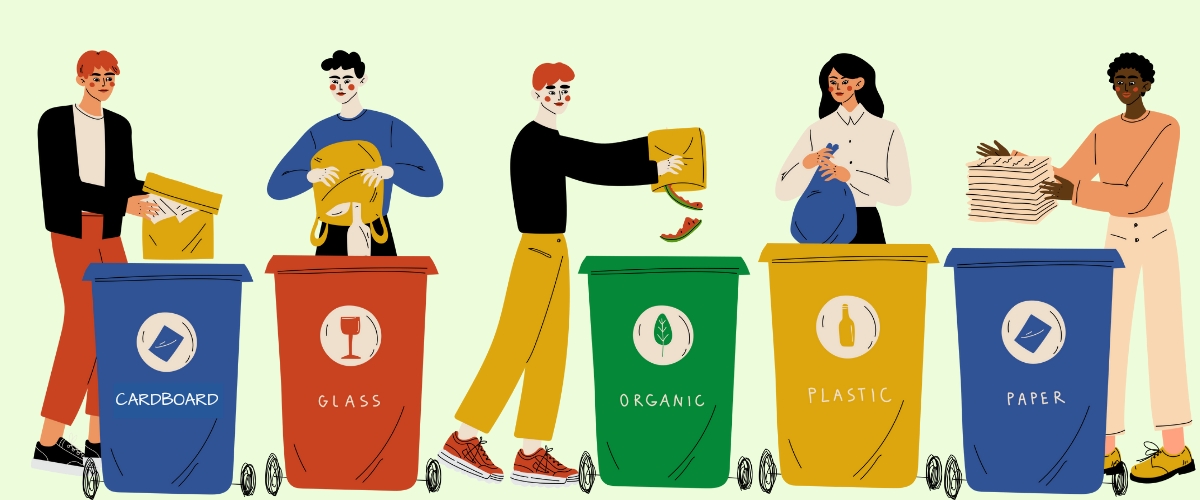
Contamination of waste is yet another huge problem in the recycling cycle. Often it can end up an unnecessary drain on resources, due to mixing of different types of recycling. With many local authorities providing one joint bin for all types of materials, much paper and cardboard recycling can end up being redirected from recycling to the landfill as it is more easily contaminated. The ease of providing just one, mixed recycling bin is no excuse for this troubling dynamic to continue. As research shows, it is a false economy if we look at the whole recycling cycle, and a little bit of extra provision at the initial stages can go a long way. Cleanly separated recycling can save resources for manufacturers, meaning they are willing to pay. According to a Bryson Recycling comparative study, clear, separated recycling materials can be worth up to 3-4 times more. And stakeholders at all levels can reap the benefits - a trial of separate household recycling bins in Ireland showed that such a move can increase recycling by as much as 30%.
Thus, both the ecological as well as the economic case for improving our recycling habits is clear. While organisations continue to fail to address the issue of messy, comingled recycling and unclear guidelines and communication, contamination and the resulting landfill waste will keep on piling up. To address these issues head on, an honest reckoning with the recycling misconceptions and blind spots is long overdue.
We have the means and the common will to do so. While the already high recycling rates show overwhelming public support, and with organisations like the Green Alchemist providing ready made solutions to at least some of the problems, it is up to governments and companies to break the silence and the bad recycling habits. The urgency of building towards a more sustainable future, which must include a cleaner recycling industry, has never been clearer.